A Brief Biography of Guru Padmasambhava
— The Second Buddha of the Land of Snows —
蓮花生大士簡介——雪域第二佛陀
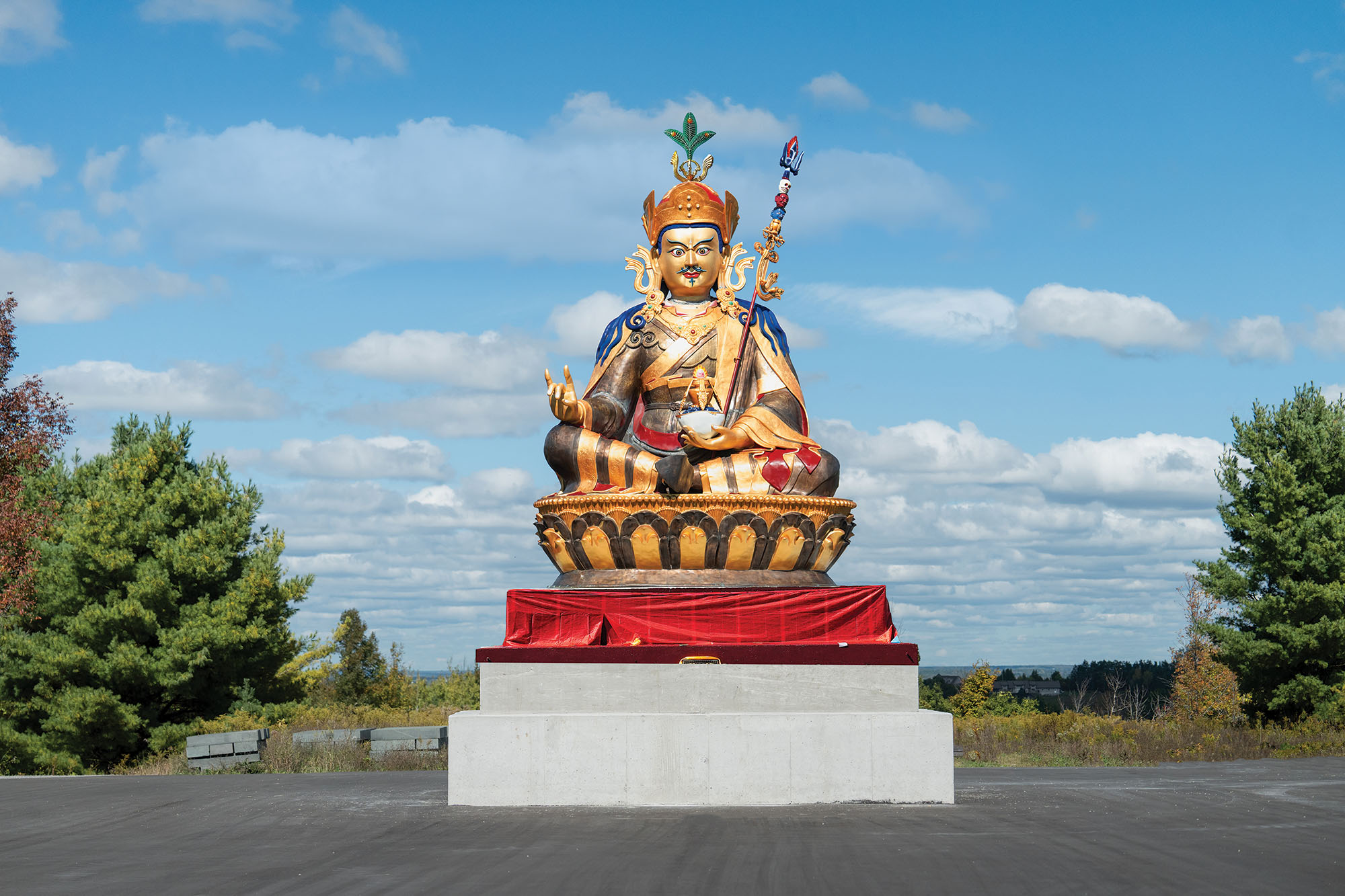
Guru Padmasambhava, revered as the very embodiment of all Buddhas and Bodhisattvas, was born in the kingdom of Uddiyana in ancient northwestern India. According to Tantric historical texts, a red light emanated from the heart of Amitabha Buddha, carrying the seed syllable “She” (HRIH), which descended into Lake Dhanakosha. From a lotus born of the five sublime wisdoms that arose from the lake, an eight-year-old child manifested. He was welcomed into the palace by King Indrabhuti of Uddiyana, who adopted him and named him "Padmasambhava" (Lotus-Born). Tradition holds that he manifested the accomplishment of having studied and mastered all exoteric and esoteric teachings under the Eight Great Vidyadharas of India, and attained the four levels of Vidyadhara realization through profound practice in sacred sites such as the great charnel grounds.
Endowed with immeasurable compassion and supreme wisdom, he is the sublime being prophesied by the Buddha as "my emanation appearing twenty-eight years after my parinirvana." He extensively propagated the teachings of the highest Tantric path and is honored as the Second Buddha, Padmasambhava. In the mid-8th century, around 762 CE, at the invitation of King Trisong Detsen of Tibet, Padmasambhava, together with the Bodhisattva Abbot Shantarakshita, established Samye Monastery. From within the profound, non-dual embrace of wisdom and compassion, through his unimpeded miraculous powers, he subdued or guided measureless beings, both human and non-human, laying the foundation for the Dharma in the high plateau of the Land of Snows.
At Samye, Padmasambhava formed a monastic community, trained scriptural translators, and invited numerous great master-translators (lotsawas) and panditas from India to Tibet. Under the auspices of the Abbot, the Master, and the Dharma King (Khenpo, Lopon, Chogyal), approximately 90% of the Buddha's exoteric and esoteric scriptures and treatises in their Indian Sanskrit versions were translated into Tibetan, now known as the Kangyur and Tengyur, comprising over 300 volumes. These texts encompass the Tripitaka, the Four Tantras, and the Nine Yanas, containing the complete exoteric and esoteric teachings and establishing an unshakable milestone for Tibetan Buddhism.
Historical records from Dunhuang indicate that Padmasambhava not only spread the Dharma in Tibet, Ü-Tsang, Kham, and other such regions, but also visited the sacred Mount Wutai, the bodhimanda of Manjushri, to bless the land and propagate the Buddha’s teachings. This marks a sublime and auspicious connection between Mount Wutai and Padmasambhava.
Over a thousand years ago, Padmasambhava, perceiving the future with his pristine, unobstructed vision, prophesied in his Terma (hidden treasure) teachings: "When iron birds fly in the sky and iron horses run on wheels, the Vajrayana teachings will shine like the sun, dispelling the darkness of the degenerate age and spreading throughout the world." Today, this precise prophecy is now made manifest. Nearly the entire Tibetan people hold the Buddha’s teachings as their faith, studying the Tripitaka and the Four Tantras, and practicing the supreme Dharma of śīla, samādhi, and prajñā (discipline, meditation, and wisdom).
The model of his Dharma Teachings is structured with the Vinaya of Individual Liberation (Pratimokṣa) as its outer foundation, the Bodhisattva path centered on bodhichitta and great compassion as its inner practice, and the supreme path of profound Secret Mantra as its innermost secret application. These three are seamlessly integrated, with clear progression and harmony between exoteric and esoteric teachings.
In this degenerate age, when beings are meager in merit and demonic obstacles abound, Padmasambhava solemnly pledged that his blessings would multiply like thunder, shattering ignorance and all inner and outer hindrances. Together with his consort Yeshe Tsogyal, they jointly made the aspiration to propagate the essence of Vajrayana worldwide through the profound method of Terma treasures, thereby providing an extraordinary and swift path to realization.
The Seven-Line Prayer to Guru Rinpoche, which is the very essence of the meritorious qualities of the sacred body, speech, and mind of all Buddhas and Bodhisattvas, and praised in unison by the assembly of 100,000 wisdom dakinis, is the supreme and wondrous method to dispel all outer, inner, and secret obstacles and the extraordinary pith instruction to swiftly attain both common and uncommon accomplishments. For all devotees who recite the Seven-Line Prayer and his mantra, they open themselves to the flow of his blessings, dispel adverse conditions, enhance favorable circumstances, receive his meticulous protection, and are guided upon the true path to liberation.
Thus, Guru Padmasambhava is not only a great Patriarch in Buddhist history but also one of the most profound and far-reaching historical figures in the spread of the Buddha’s exoteric and esoteric teachings across India, Nepal, Tibet, and China. He is the compassionate refuge and protector whom all sentient beings in the degenerate age can deeply rely upon. With his unimpeded miraculous powers he subdued demonic forces, with wisdom he transformed powerful spiritual beings into protectors of the Dharma, and with his compassionate aspirations he liberated beings from suffering. He is like a luminous lamp dispelling darkness, a compassionate ferryman guiding all sentient beings across the ocean of samsara. The power of his blessings shines forth as a luminous beacon of hope in this present age.
May we all pray in unison, invoking Guru Padmasambhava to graciously watch over and protect us, for world peace and the happiness of all beings.
The Seven-Line Prayer: An Invocation to Guru Rinpoche
HŪM
In the northwest of the land of Oḍḍiyāna,
On the pollen bed of a lotus flower,
You attained the most wondrous siddhi,
Renowned as the "Lotus-Born,"
Surrounded by a retinue of ḍākinīs—
Following you, I will attain accomplishment;
Pray, come and confer your blessings!
GURU PADMA SIDDHI HŪM
Guru Padmasambhava’s Mantra:
OM AH HŪM VAJRA GURU PADMA SIDDHI HŪM
蓮花生大士,被譽為「一切諸佛菩薩之總集」,誕生於古印度西北部的烏仗那國。依密續歷史文獻記載:從阿彌陀佛心間發放紅光種子捨字,射入達那郭夏湖,從湖中生起五種妙慧之蓮花中,化生為八歲童子顯身,被烏仗那國王恩札布德迎請至宮殿中收養,賜名「蓮花生」。顯現為從印度八大持明尊者處學修一切顯密教法,於各大尸陀林等聖地實修獲得四持明果位。
他具足無量慈悲與無上智慧,也是佛陀授記為「涅槃後二十八年時我的化身」而出現的殊勝聖者,為無上密乘教法做出深廣的弘揚,被譽為第二佛陀蓮花生。八世紀中葉,約公元762年左右,蓮花生應藏王赤松德贊之請,與菩提薩埵(寂護論師)共建桑耶寺。蓮花生於密意智悲雙運的境界中,以無礙廣大的神通力度化人與非人等無量眾生,為雪域高原奠定佛法基礎。蓮花生大士在桑耶寺建立僧團、培養譯經者,並迎請印度諸多大翻譯師、班智達入藏,在師君三尊的主持下,將90%左右印度梵文版本的佛陀顯密經典與論著,翻譯成藏文典籍,現稱為《甘卓爾》《丹卓爾》,共三百餘冊,內容為三藏、四續、九乘次第,包含了三乘顯密一切教法,奠定了藏傳佛教的不倒里程碑。依敦煌的歷史記載,蓮花生不僅在西藏、衛藏與康藏等地弘揚教法,並且來到文殊菩薩道場聖地五臺山,加持聖地與弘揚佛陀教法,這也是我們五臺山與蓮花生大士殊勝因緣的由來。
一千多年前,蓮師以無礙神通諦觀未來,曾於伏藏法中預言:「當鐵鳥昇空、鐵馬奔馳之時,密法將如日輪照破末法黑暗,弘揚於全世界。」現今如此現前了準確授記,西藏幾乎全民族信仰佛陀教法,並學習三藏四續的教法,修持戒定慧等無上正法。蓮花生大士所弘揚之教法模式,外在以依止別解脫律儀為基礎,內在行持以菩提心與大悲為核心的菩薩道,密意則實踐甚深密咒之無上乘道,三者次第清晰、顯密圓融無礙。在末法時代,眾生福薄、魔障熾盛,蓮師誓願其加持之力將倍增如雷,摧破無明與障礙。他與明妃益西措嘉共同發願將密法精髓以伏藏方式弘揚世界,迅速摧毀煩惱,獲得成就之殊勝近道。
諸佛菩薩的身語意三密功德精髓、十萬智慧空行母同聲禮讚的《金剛七句祈禱文》,是遣除內外密等一切障礙的無上妙法,也是迅速獲得共與不共成就的殊勝竅訣,凡是蓮師的敬信者,念誦《金剛七句祈禱文》與心咒,感通蓮師加持,遣除逆緣,增上順緣,護佑無微不至,引導修行者趨入解脫正道。
因此,蓮花生大士不僅是佛教歷史上偉大的祖師,也是印、尼、藏、漢等地歷史上弘揚佛陀顯密教法最深廣的歷史人物之一,更是末法眾生可深切依怙的慈悲護主。他以神通降伏魔眾、以智慧轉化護法、以悲願濟度苦難,如明燈照破黑暗,慈航普渡眾生於生死苦海。他的加持之力,是當今時代最珍貴的希望之光。
願我們同聲祈禱,祈請蓮花生大士垂念護佑,願世界和平,眾生安樂。
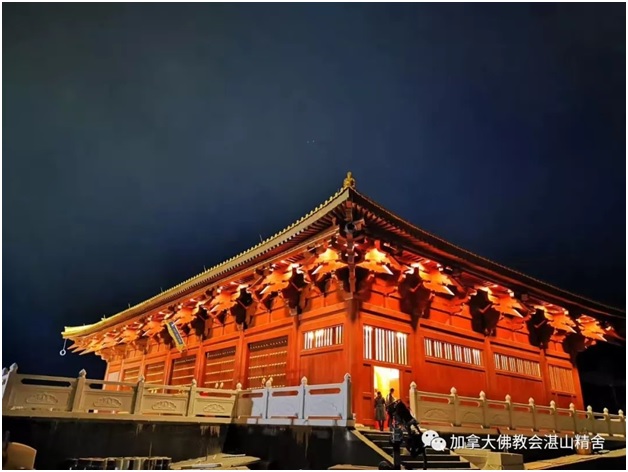 The Main Buddha Hall 大雄寶殿Eight Sights 八景, Places of Interest 寺院景觀
 The Buddhist Arts Gallery 佛教藝術館Eight Sights 八景, Places of Interest 寺院景觀
 The Bliss & Longevity Twin Pagodas 福壽雙塔Places of Interest 寺院景觀, Sixteen Points of Interests 十六點
 Wisdom Lake 靈泉湖Eight Sights 八景, Places of Interest 寺院景觀
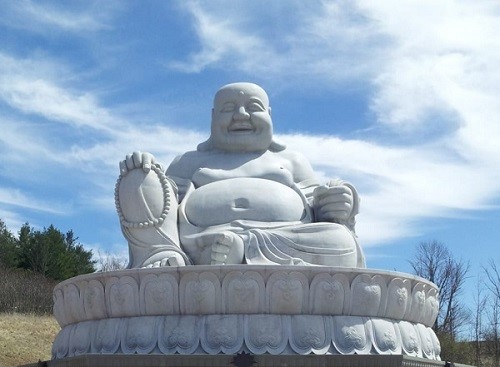 Maitreya Buddha (Happy Buddha) 彌勒大佛Eight Sights 八景, Places of Interest 寺院景觀
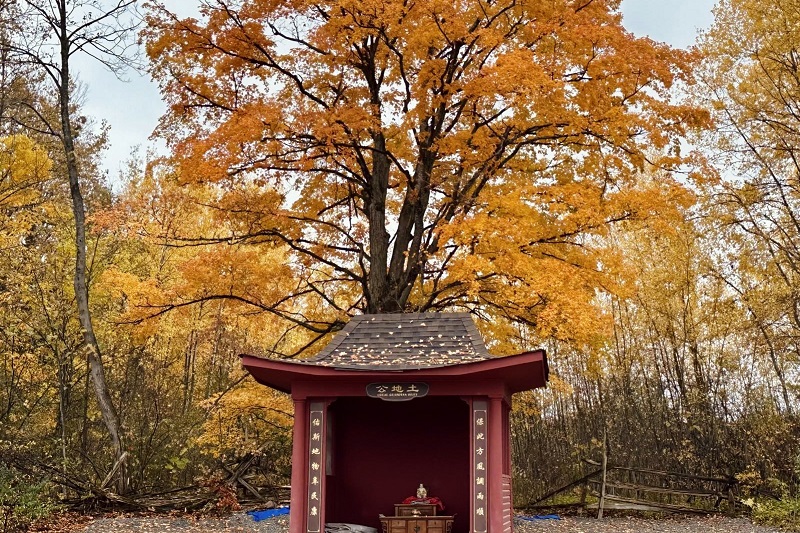 The Mountain and Earth Deity Shrine 山神土地廟Places of Interest 寺院景觀, Sixteen Points of Interests 十六點
 The Five Platforms of Manjusri Bodhisattva 五臺文殊師利菩薩Places of Interest 寺院景觀
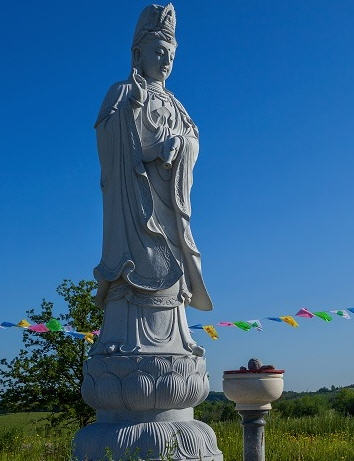 Willow Guanyin 楊柳觀音Places of Interest 寺院景觀, Sixteen Points of Interests 十六點
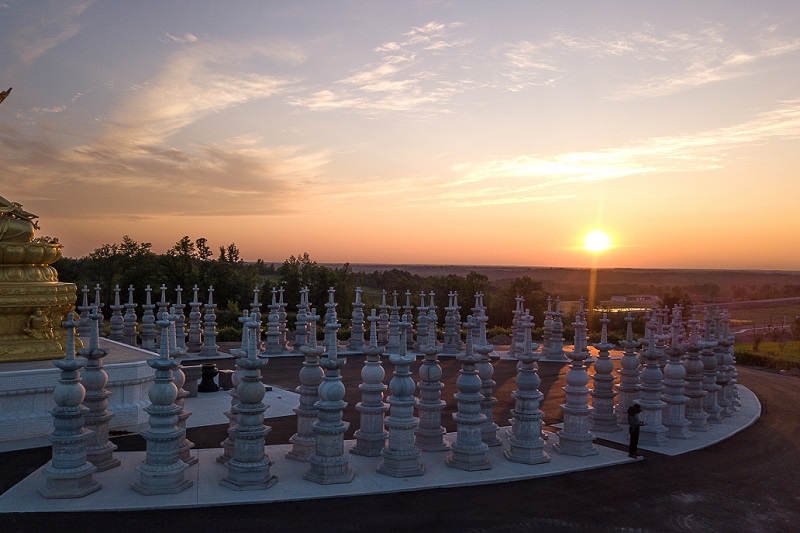 Eighty-Eight Buddha Surrounding the South Platform 八十八座佛塔繞南台Places of Interest 寺院景觀, Sixteen Points of Interests 十六點
 Hall of Sudhana 善財寶殿Eight Sights 八景, Places of Interest 寺院景觀
 The Seven Treasures Wish-Fulfilling Pagodas 七寶如意塔Places of Interest 寺院景觀, Sixteen Points of Interests 十六點